- Pritzker Fellows
- Current Fellows
- Bhaskar Sunkara
Bhaskar Sunkara
President of The Nation & Founding Editor of Jacobin
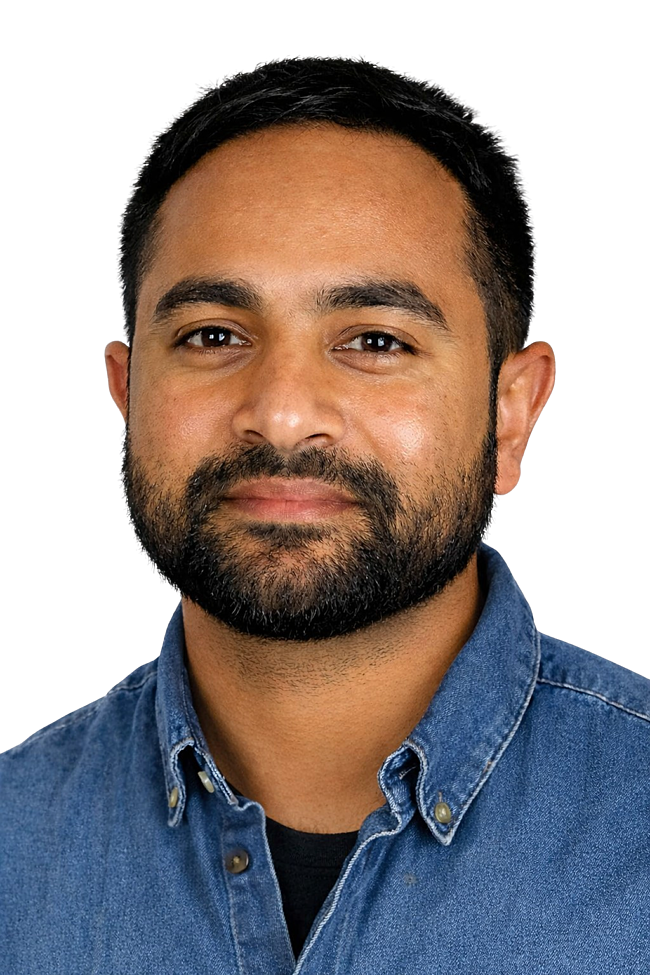
Biography
Bhaskar Sunkara is the president of The Nation magazine and the editorial director of Jacobin, a publication that he founded as an undergraduate in 2010. He is also the publisher of Bookforum, Catalyst, and the author of The Socialist Manifesto: The Case for Radical Politics in an Era of Extreme Inequality. Sunkara is a former vice chair of the Democratic Socialists of America and is currently on the board of the Center for Working-Class Politics. His writing has appeared in The Guardian, The New York Times, The Washington Post, and Foreign Policy, among other venues.
Seminars
"The American Socialist"
When Bhaskar Sunkara - the founding editor of Jacobin, president of TheNation magazine and a member of the same political organization as the new mayor of New York City - was coming of age politically, class was central to Marxist analysis but largely absent from mainstream political language. In recent years, however, appeals to workers have re-emerged across the spectrum, from democratic socialists to conservative and nationalist movements. In his seminars, Bhaskar will use the lens of history, his own tract, The Socialist Manifesto: The Case for Radical Politics in an Era of Extreme Inequality and practical strategies for navigating a contemporary socialist political leadership frame.
Seminars are off the record and open to current UChicago students only.
This opening seminar uses Bhaskar Sunkara’s experience founding and editing Jacobin to examine what class politics looks like when traditional vehicles of working-class power - parties, unions and mass organizations - are weak or absent. The session begins with why he chose magazine publishing as a political intervention and how publishing became a way to engage class politics in a period marked by dealignment rather than mass alignment.
The discussion will situate Jacobin within a longer tradition of ideological magazines that emerged when political movements lacked formal power, including conservative journals like National Review. Can publishing function as a substitute for organizational strength, how media institutions shape political language and coalition boundaries? What are the limits?
This seminar examines why socialists and radicals in the United States have repeatedly operated within the Democratic Party, rather than building an independent party of their own. The session begins from Bhaskar Sunkara’s own experience - joining the Democratic Socialists of America as a teenager and registering as a Democrat as a practical necessity - to explore how the structure of U.S. politics constrains left-wing political strategy.
Discussion focuses on the two-party system, electoral rules, labor law and racial division, as well as the long New Deal period, when the Democratic Party functioned as an American partial substitute for social democracy without becoming a workers’ party. The seminar asks whether the lack of organizational independence has been a strength, a liability or an unavoidable condition for socialist politics in the United States and what this history suggests about the prospects for building durable working-class power today.
This seminar will look at the return of “the worker” as a political figure in contemporary American politics. The session begins from a basic question: what does it mean when class returns to politics primarily as a symbol or identity rather than as an organized social force?
Let’s examine this moment in relation to earlier Marxist understandings of working-class identity, which treated class not as a cultural label but as a political relationship produced through institutions, struggle and collective action. The seminar asks whether contemporary invocations of “the worker” reflect a revival of class politics, a rebranding of cultural grievance in class terms, or a new form of identity politics altogether. The goal is not to resolve the question but to clarify what is - and is not - being resurrected when class language reappears in a fragmented political landscape.
We unpack why social democracy has played such a large role in American socialist and progressive debates. Drawing on Bhaskar Sunkara’s experience covering and engaging with figures like Bernie Sanders, the session starts from a practical question: why do U.S. reformers so often point to Nordic countries when arguing for domestic change?
Discussion focuses on the postwar social-democratic settlement in Western and Northern Europe and how socialist and labor parties translated working-class organization into governing power. The seminar examines what political problems social democracy helped resolve, the conditions that made those outcomes possible and what can and cannot be carried over when European experiences are used to frame contemporary American politics.
The Clinton presidency is a case study to examine neoliberalism as a political turn shaped by structural constraint rather than individual betrayal of progressive ideals. Drawing on arguments long advanced in Jacobin, the session treats “Third Way” politics not as a moral deviation from social democracy, but as a response to weakened labor power, electoral vulnerability and the collapse of the postwar economic settlement.
Discussion focuses on what Clinton-era Democrats were responding to - slower growth, globalization, capital mobility and a transformed electorate - and how those adaptations have shaped the modern Democratic Party.
What happened to democratic politics once class ceased to function as a primary organizing principle? Drawing on Bhaskar Sunkara’s reporting and editorial experience, the session focuses on how globalization, declining union density and the collapse of mass membership organizations broke the link between economic position and political behavior.
The discussion centers on the rise of identity- and issue-based politics as a dominant substitute for class alignment. Rather than treating identity politics as a cultural choice or moral error, the seminar examines it as a product of institutional change: the shift from workplace-based organizing to NGO-driven advocacy, legalism and professionalized activism. Have these politics represented a genuine expansion of democratic inclusion or a narrowing of popular participation that reshaped the Democratic Party around social issues while weakening its connection to working-class voters?
This seminar examines right-wing populism as a response to dealignment, with particular attention to efforts on the Republican side to mobilize working-class voters without socialist institutions or redistributive programs. The session focuses on pro-worker conservatism, national-populism and anti-elite rhetoric as strategies for coalition-building under conditions where class alignment has weakened.
In conversation with Sohrab Ahmari, the discussion explores whether conservative populism represents a serious attempt to reconstruct working-class politics or a symbolic politics that substitutes cultural conflict for material power. The seminar asks what these movements get right about class dealignment, what they offer working-class voters in practice and where their political limits lie.
This final seminar evaluates whether contemporary shifts on the Democratic left have translated into meaningful changes in the party’s working-class base. Drawing on data from the Center for Working-Class Politics, where Sunkara is a board member, the session asks whether “moving left” has expanded working-class support or primarily reorganized the party’s activist and professional strata.
Discussion focuses on younger democratic socialist figures, including Zohran Mamdani, as test cases for whether class realignment is emerging under present conditions or whether these successes reflect a politics adapted to fragmentation rather than alignment. The seminar concludes by asking whether rebuilding class-based majorities remains possible or desirable, or whether progressive politics is more likely to persist as a coalition of overlapping interest groups in which labor functions as one element among many.